
It happens almost every year.
The #1 overall seed - the team everyone and their mother picked to win it all - goes down. Maybe it's a buzzer-beater in the Sweet 16. Maybe it's a second-round collapse that nobody saw coming.
The reaction in every bracket pool is immediate. Half the group chat explodes. The other half goes quiet.
But what actually happens to the pool math when this team loses?
It Happens More Than You Think
The #1 overall seed has been knocked out before the Final Four in 10 of the last 20 tournaments. It's not a freak event. It's a regular part of March Madness.
And in most bracket pools, roughly 30-40% of participants pick the #1 overall seed as their champion. In some pools it's higher - we've seen pools where over half the field picked the top seed to win it all.
That means a single game can effectively eliminate a third of your competition.
The Obvious Effect: Their Brackets Take a Hit
This part is straightforward. Everyone who picked the #1 overall seed as their champion just lost a ton of potential points. In a standard scoring system (1-2-4-8-16-32), picking the champion correctly is worth 32 points. That's gone. Plus the points from every round they expected that team to win through.
In a typical pool, losing your champion in the Sweet 16 costs you somewhere around 60-80 potential points. That's usually not recoverable.
The Surprising Effect: Everyone's Odds Shift
Here's where it gets interesting. The upset doesn't just hurt the people who picked the #1 seed. It rearranges the entire pool.
Some people's odds go DOWN even though they didn't pick the upset team. How? Because they were counting on beating the people who did pick the #1 seed in other ways. With those brackets now weakened, the competitive landscape shifts. Maybe the person who was in 30th place - who you were never worried about - suddenly becomes the favorite because their contrarian Final Four is fully intact.
The people who benefit most aren't always who you'd expect. You'd think the people who picked the team that pulled the upset would benefit the most. Sometimes they do. But often the biggest beneficiaries are people who simply picked a different champion and still have their bracket intact while 40% of the field just got torched.
Running the Numbers: Before and After
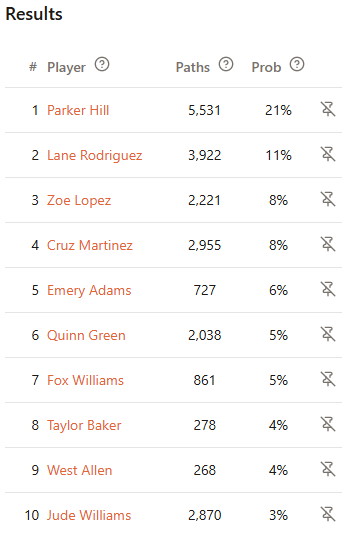
We ran a simulation on a sample 50-person pool with standard scoring. Before the #1 overall seed lost in the Sweet 16:
After the upset:
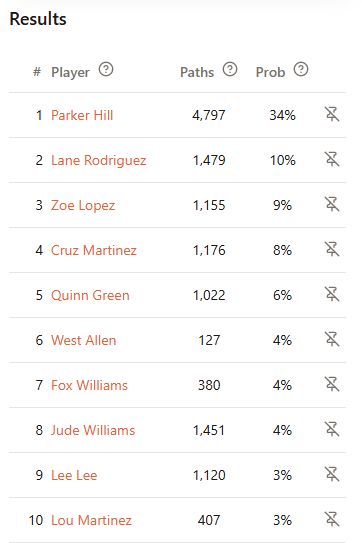
The biggest swings were dramatic. Players who had the #1 seed as their champion dropped from contenders to near-zero. A few players who weren't on anyone's radar jumped into the top five.
The person who benefited most? They didn't even pick the winning team in that game. They just had a differentiated bracket that was no longer competing against 40% of the field.
What to Do When It Happens
If you picked the #1 overall seed and they lose:
Don't give up immediately. Run a simulation first. Your odds are worse, but unless your entire Final Four is busted, you might still have a path.
Check your remaining picks. If you still have three Final Four teams alive, you're not dead. You lost the ceiling, but you might have enough floor to compete.
If you didn't pick them:
Check how much you gained. The upset might have vaulted you from 15th in probability to 3rd. Or it might not have helped you much at all. The only way to know is to simulate it.
Look for new rooting interests. The game that mattered most to your pool chances five minutes ago might not be the same game anymore. The whole map just changed.
See How It Affects Your Pool
When the big upset hits, don't guess. Import your pool into BracketSim and run the simulation before and after. You'll see exactly how much the landscape shifted and whether you're now a contender or an underdog.
Run your pool's numbers at mybracketsim.com
In short: When the #1 overall seed loses, about 40% of brackets take a fatal hit. But the ripple effects change odds for everyone in the pool - even people who never picked that team. Simulation is the only way to see where you actually stand after the dust settles.